

12 Best AI Tools for Designers: 2026 Top Picks
Discover the best AI tools for designers [2026], including Flowstep, Figma Make and more top picks to speed up your UI/UX workflow and create better designs faster.
Looking for a Lovable alternative? Explore 8 tools for building apps and UI in 2026—from design-first platforms to full-stack AI app builders with code export.
You prompt Lovable AI with a quick app idea. Sixty seconds later, a polished-looking web app appears. You think: done. Then reality hits. The button doesn't link anywhere. The auth flow breaks on mobile. You burn through credits trying to fix the backend logic that the AI introduced on its own. What started as fast prototyping turns into an expensive debugging session—and you haven't even confirmed whether users want the product.
This is the vibe coding trap. Lovable AI and similar AI vibe coding tools are great at generating a first version fast. But skip the design step and jump straight into code, and you end up fixing UI layouts, rethinking flows and burning credits on rework. If you're looking for a Lovable AI alternative that avoids these pitfalls, you're in the right place.
The best Lovable alternative depends on what you actually need. Some Lovable AI alternatives compete in the same field—AI coding, full-stack generation and browser-based development environments. Others, like Flowstep, solve an earlier problem: getting the design right before writing code. Here are eight alternatives covering every approach to app creation.
Lovable AI is an AI-powered app builder that generates full-stack web apps from natural language prompts using React and Supabase. You describe what you want, and Lovable builds it—UI, backend logic and deployment included.
But once teams push past that initial spark, friction sets in:
Lovable AI alternatives fall into two camps. The first includes code-first builders like Bolt, V0 and Cursor that compete on the same turf—AI-powered development speed and full-stack generation of web apps and full-stack apps. The second includes tools that solve an earlier problem: getting the design right before you start writing code.
Here's a quick-reference comparison of the best Lovable alternatives to help you decide which AI alternative matches your workflow and product stage.
If you're exploring Lovable alternatives by role, check our articles on AI tools for product managers, the best AI UI design tools and the best tools for UI design.
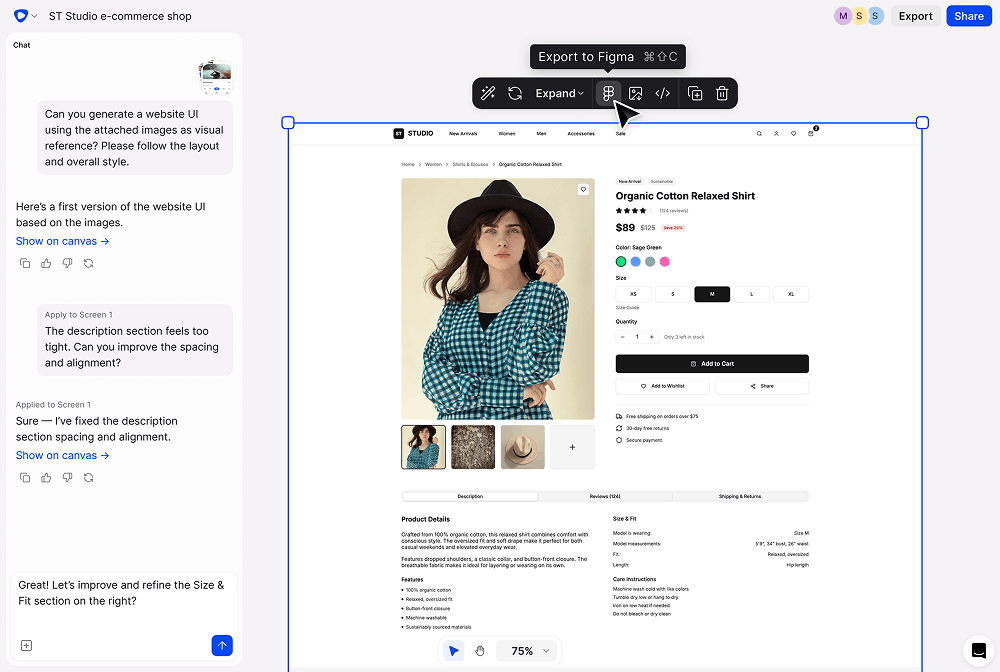
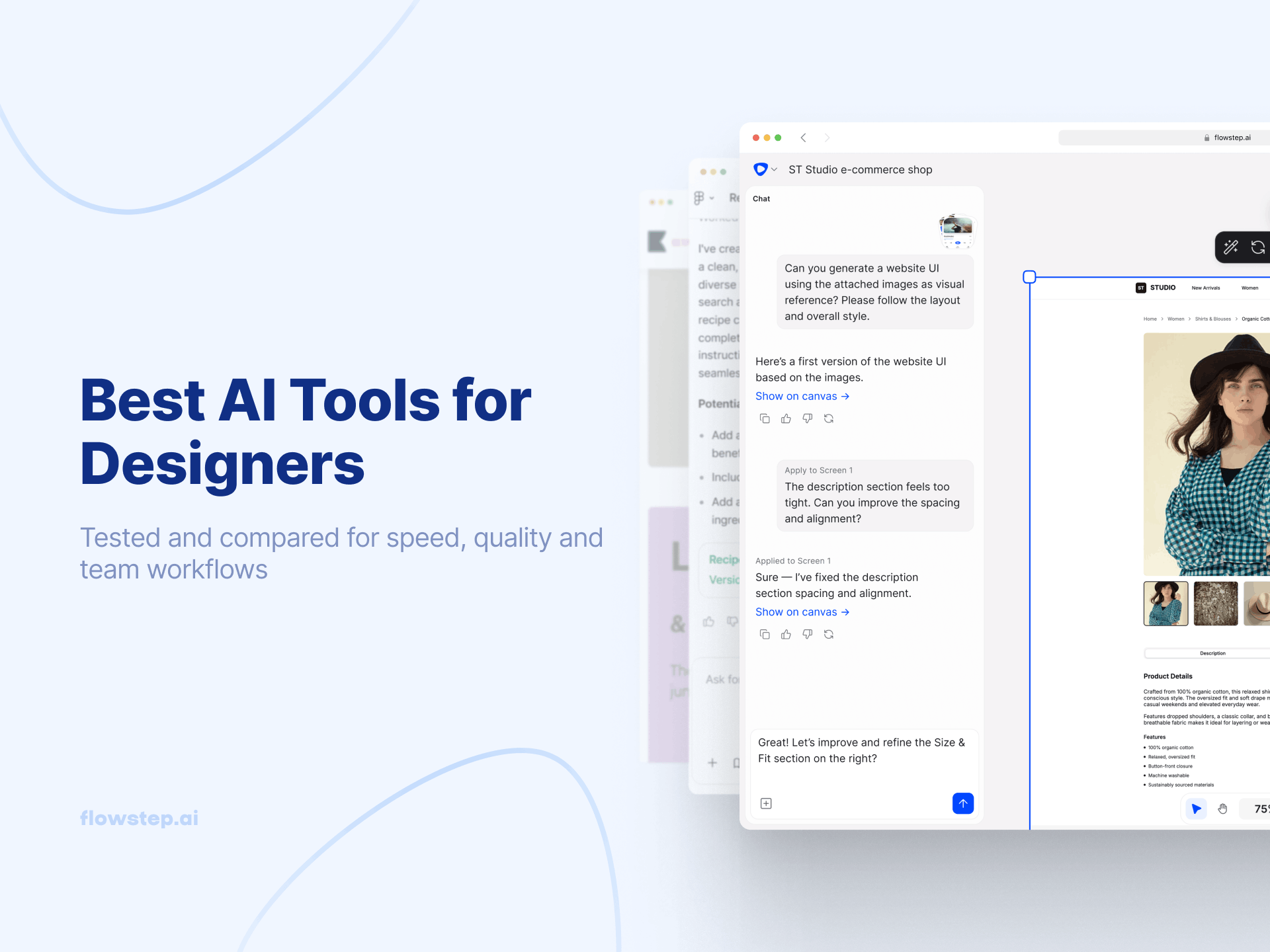
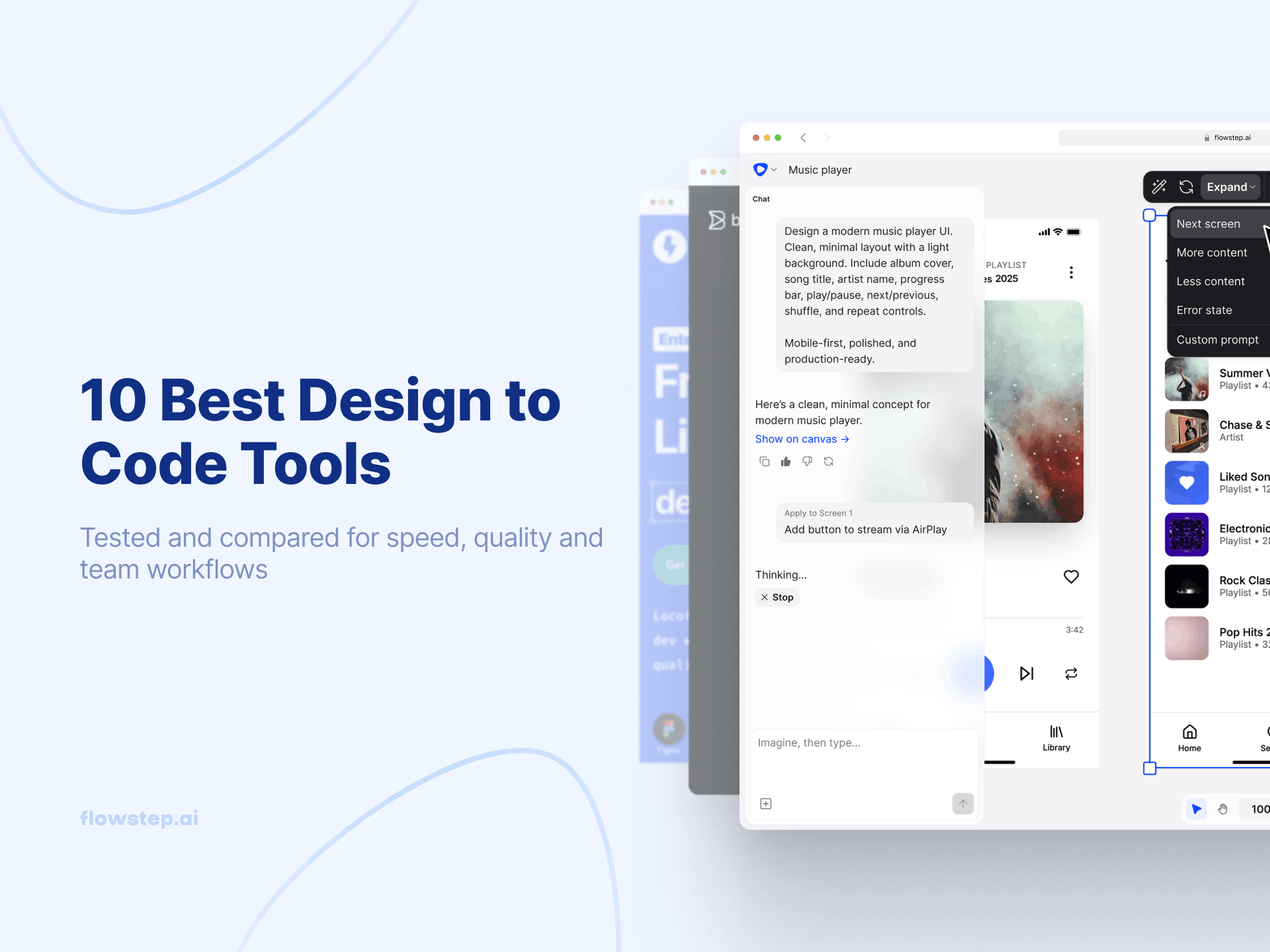
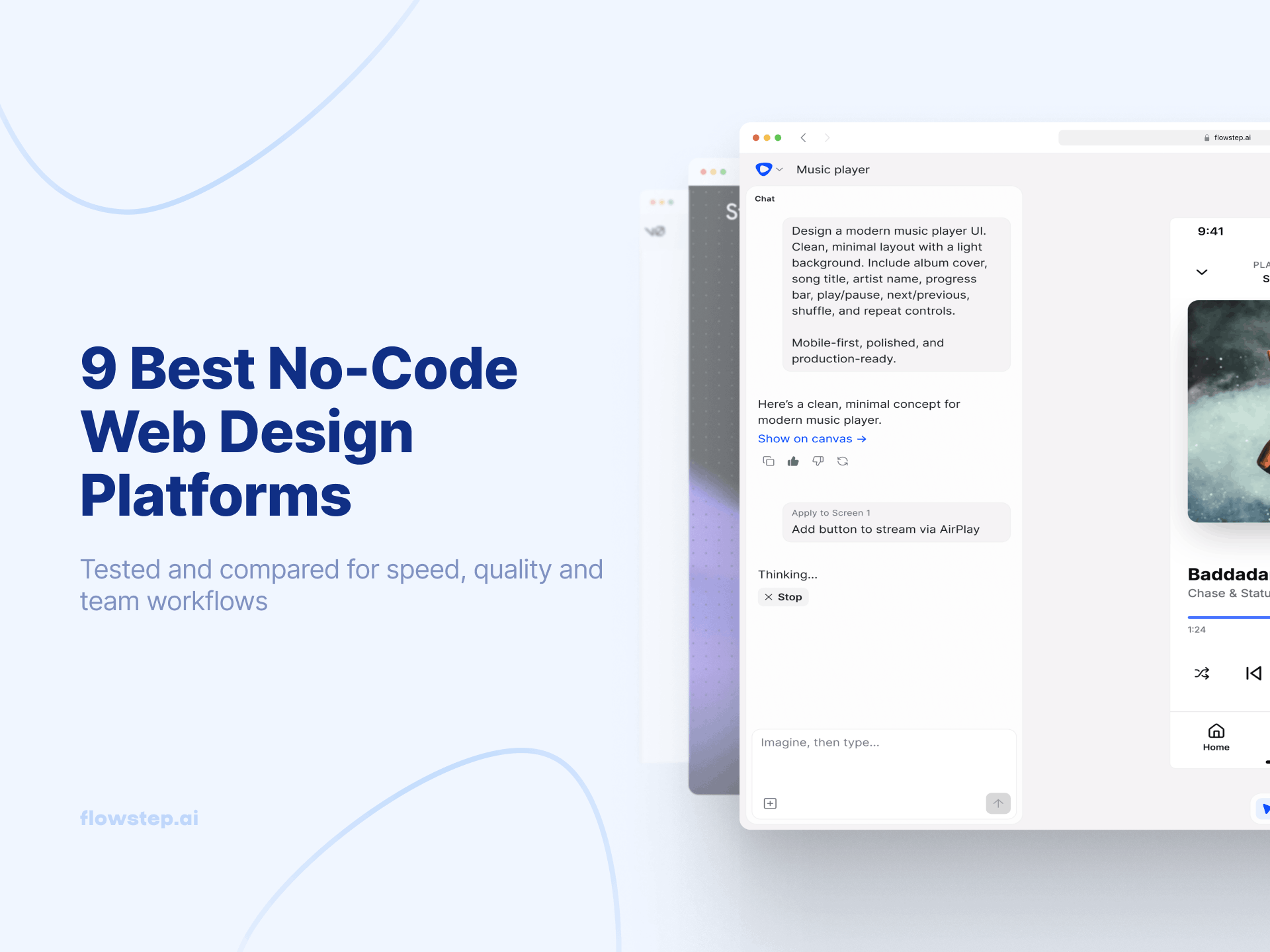
Flowstep is the best Lovable AI alternative for teams that want to nail their design direction before burning credits in code-first tools. Think of it as the pre-coding layer—the design step that should happen before any AI app builder enters the picture.
Most teams using Lovable AI skip straight to code without validating the UI, then spend hours reworking screens that don't match their product vision. Flowstep flips this. You describe your product idea in natural language, and Flowstep generates complete, editable UI layouts on an infinite canvas—login screens, dashboards, settings pages, the entire user journey.
The designs aren't static mockups. Visual editing lets you refine them with AI assistance or manually, without re-prompting or starting over—creating a tight feedback loop between your ideas and the output. Once the design is locked, copy everything straight into Figma with ⌘C and ⌘V, or export clean production-ready code built with React, TypeScript and Tailwind CSS. The result: functional apps that match your vision, not AI guesswork. Real-time collaboration means your entire team works from the same canvas—Flowstep complements tools like Claude or Cursor rather than replacing them.
It's the best Lovable alternative for rapid prototyping and producing production-ready apps.
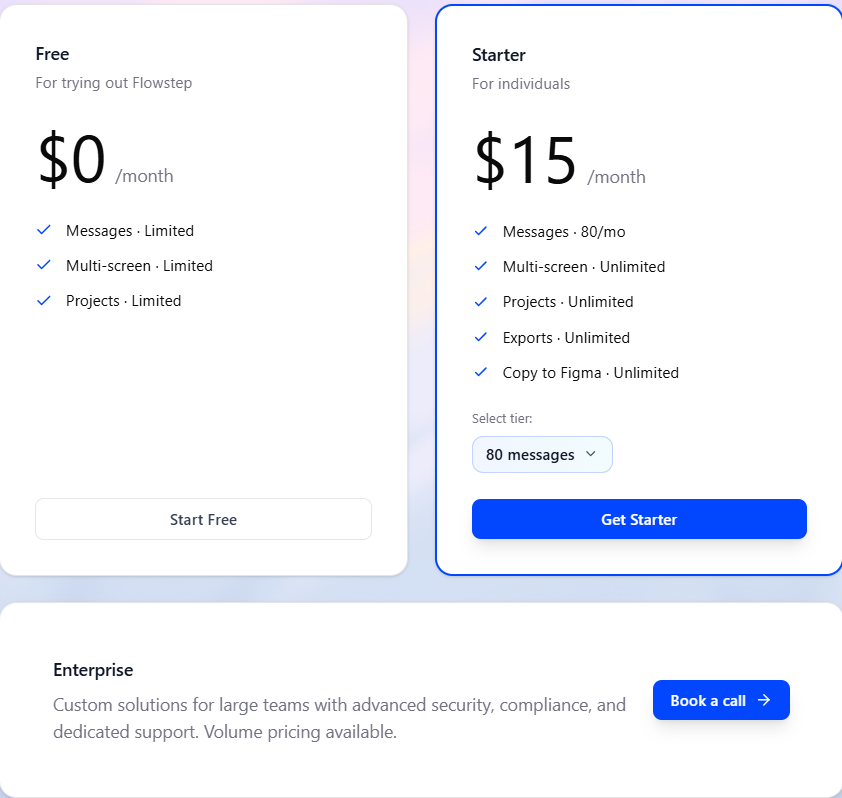
Flowstep uses a transparent pricing model based on message usage, not seats. Start on the free plan and upgrade when you need more credits. Paid plans begin at $15/month. Annual billing includes a 20% discount. Enterprise teams get custom pricing with additional security, team collaboration features and tailored limits.
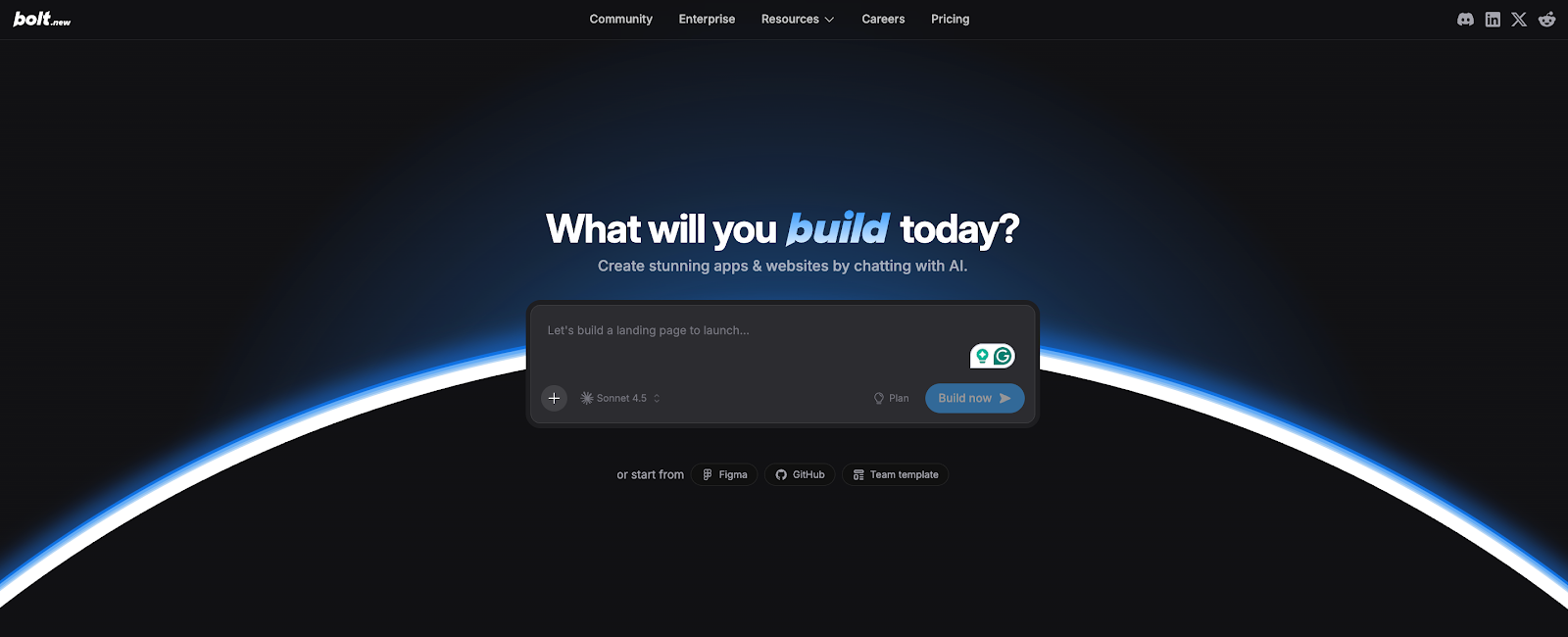
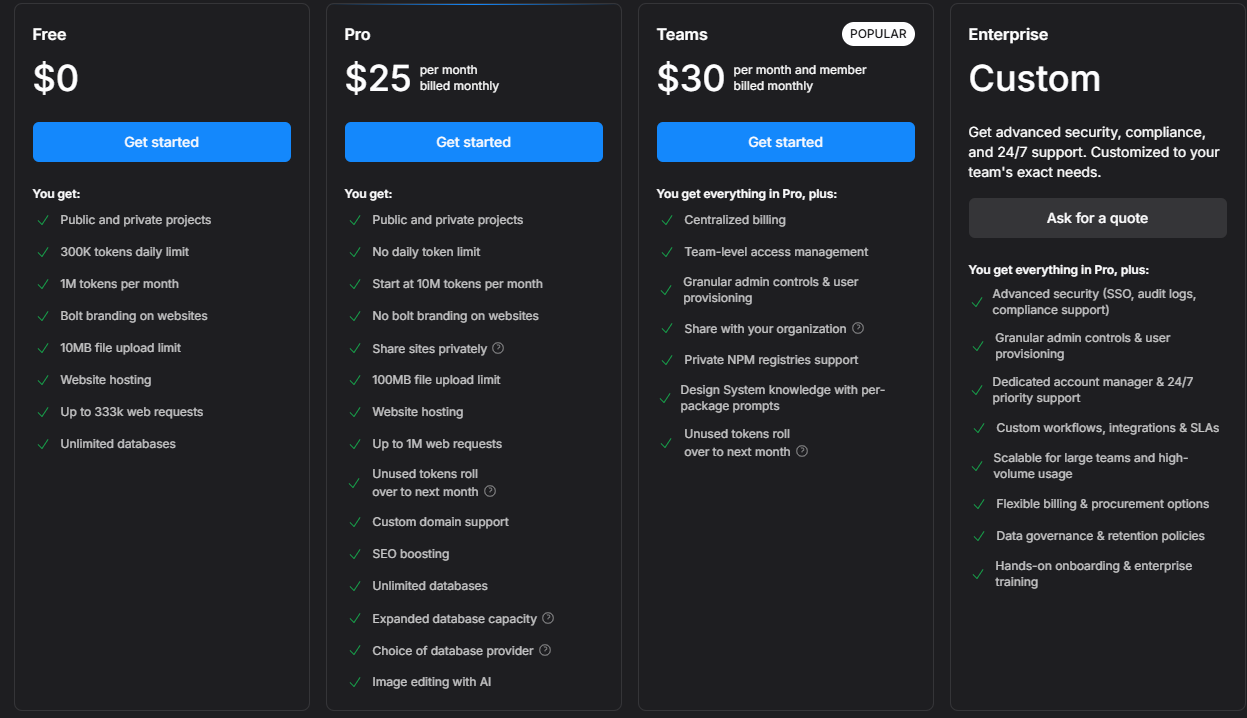
Among Lovable alternatives for full-stack application generation, Bolt is the most direct swap. It's an AI app builder that generates interactive web apps from natural language prompts in your browser—no local setup required. Where Lovable feels like a black box, Bolt gives you more visibility. You can inspect, edit and debug code directly in the browser-based development environment with full code access.
It supports multiple programming languages and frameworks—React, Vue, Svelte and Astro—a broader range than Lovable's React-only stack. That said, Bolt shares many of Lovable's challenges: token consumption is unpredictable and AI-assisted development speeds up the start but can slow down complex projects. Pairing Bolt with a design-first tool like Flowstep gives you better results.
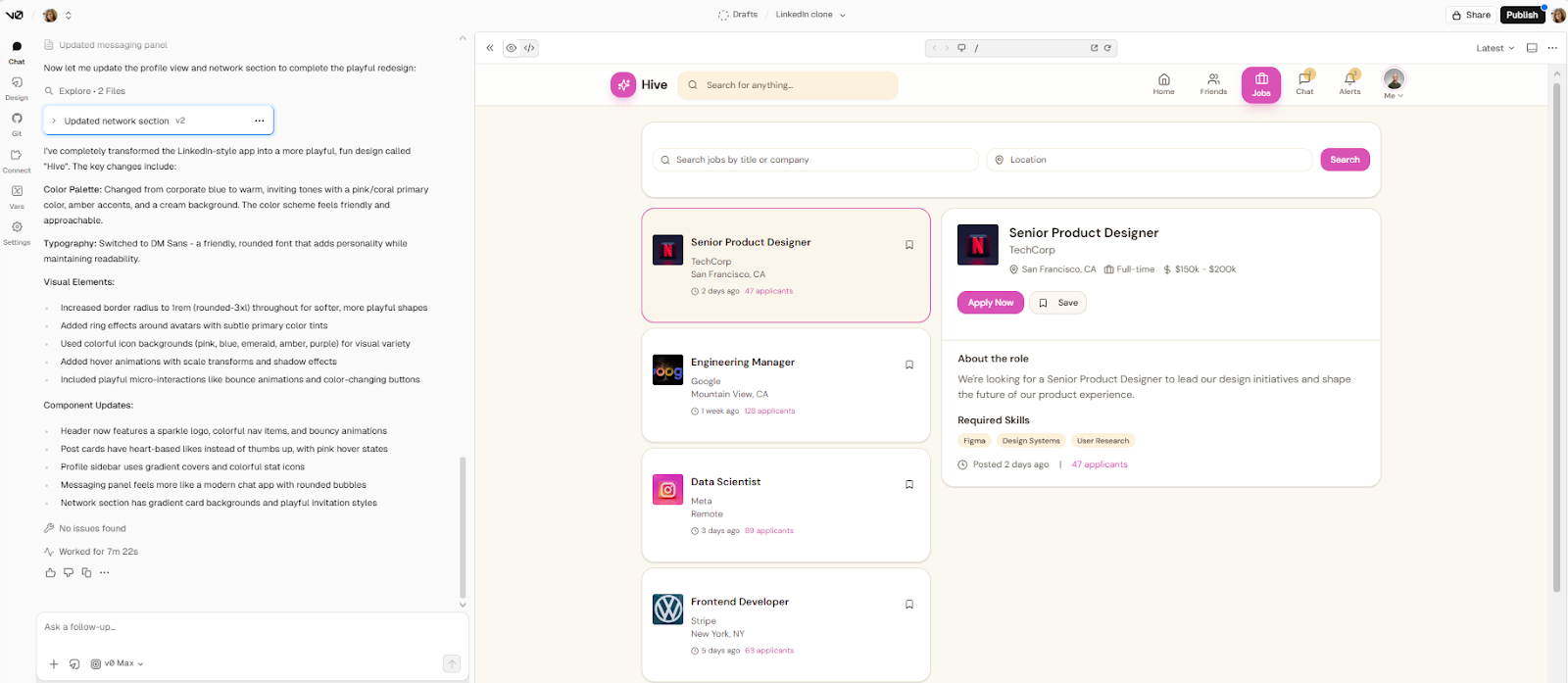
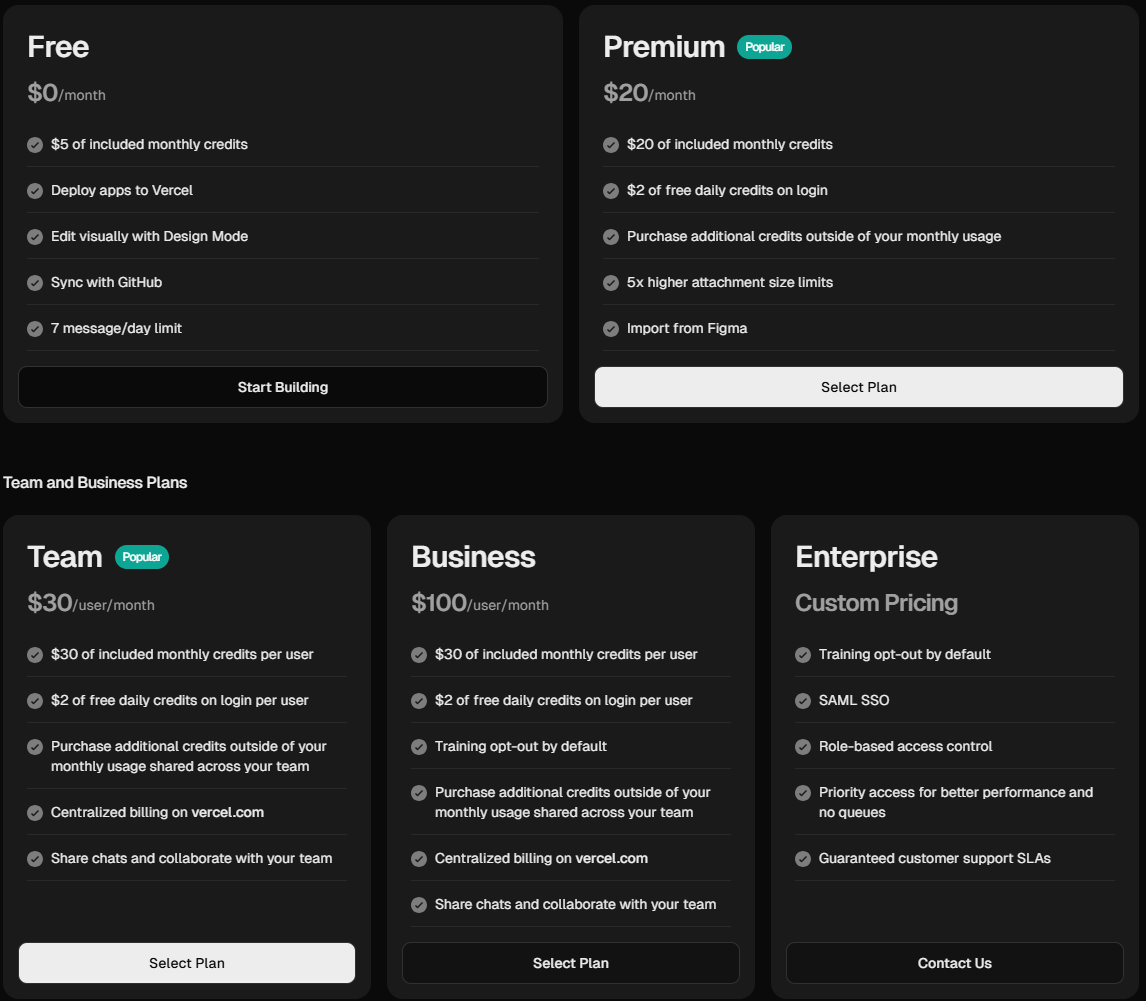
V0 is Vercel's AI-powered coding tool for React and Next.js UI scaffolding. It turns natural language prompts into working components using Tailwind CSS and shadcn/ui—focusing on rapid prototyping and component generation rather than complete full-stack apps with backend logic. Think of it as a frontend development accelerator with a built-in visual editor.
You describe what you need, get production-ready code with a live visual preview, then deploy or sync with GitHub. The AI assistant can plan steps, detect runtime issues and serve as a debugging tool by fixing errors automatically. Non-technical users looking to build a complete app will find a steeper learning curve here than with Lovable, though.
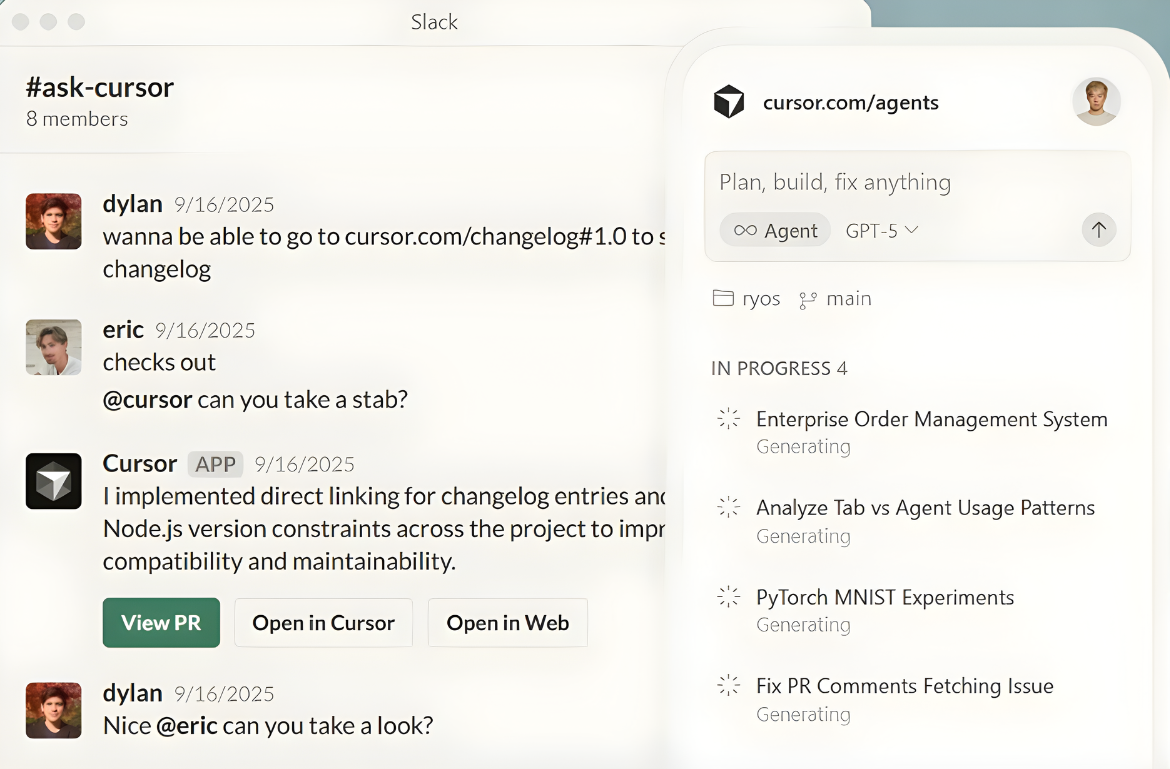
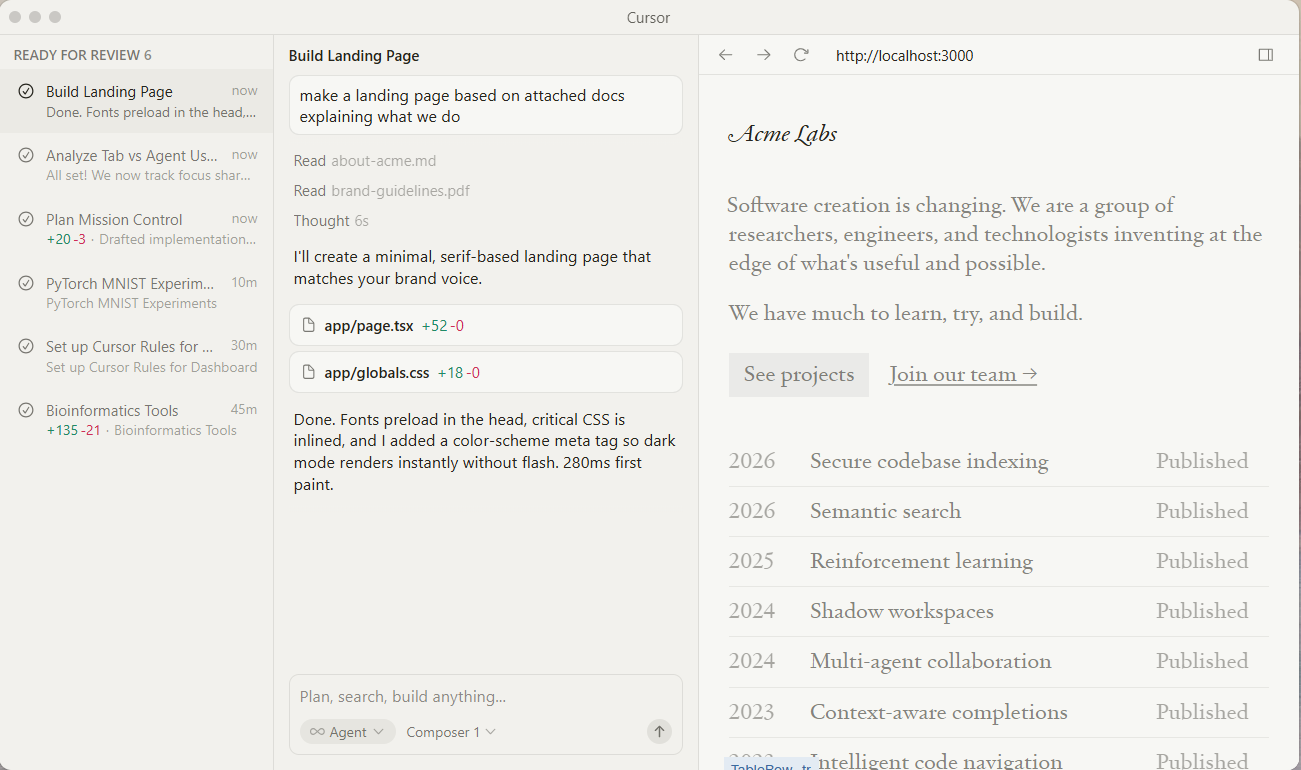
Cursor is an AI code editor—not an AI app builder. It's a different category from Lovable, but commonly compared because both promise to speed up development with AI capabilities. It's the best Lovable alternative for developers with technical expertise who want AI assistance within their existing codebase rather than a standalone app creation platform.
Cursor understands your entire codebase and provides context-aware code completion, inline editing and pair programming across multiple files—handling complex projects with more control than any prompt-based tool. For product teams, it bridges design and production: once you've locked your UI direction in Flowstep, Cursor helps your engineering team implement it faster with deeper customization.
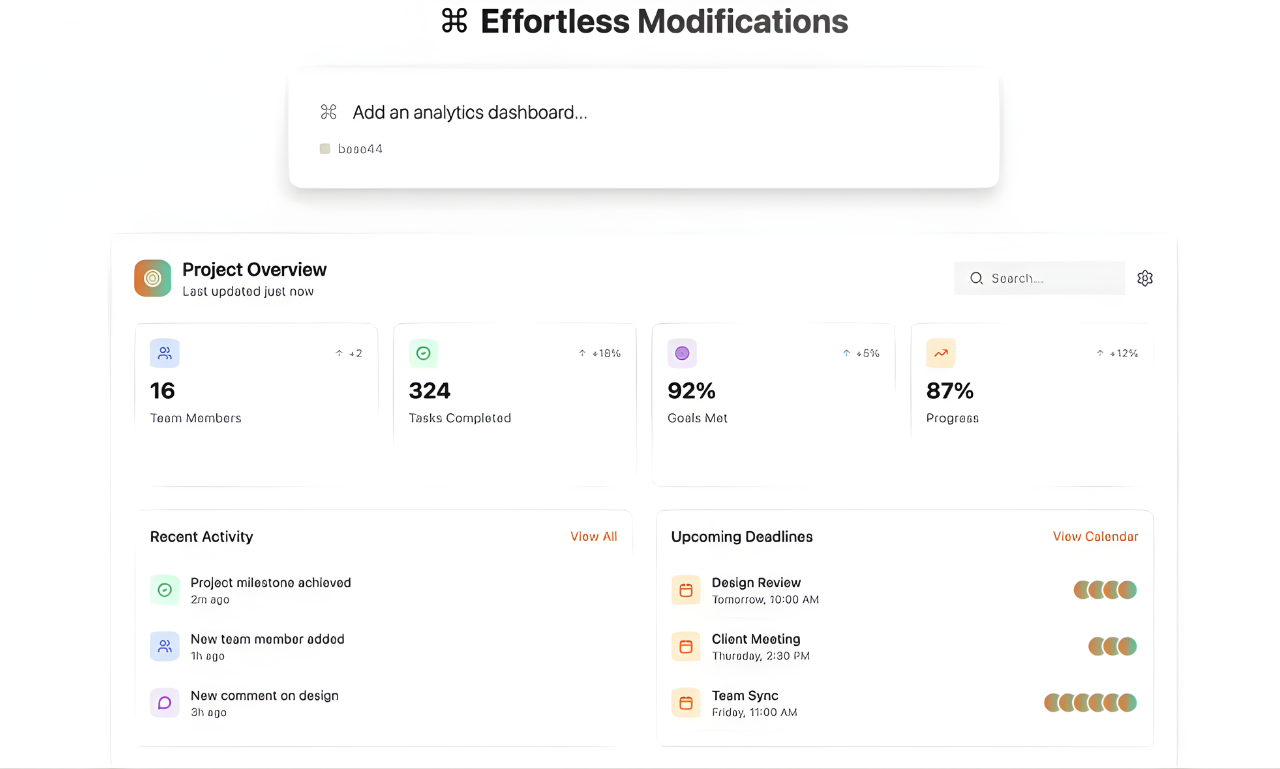
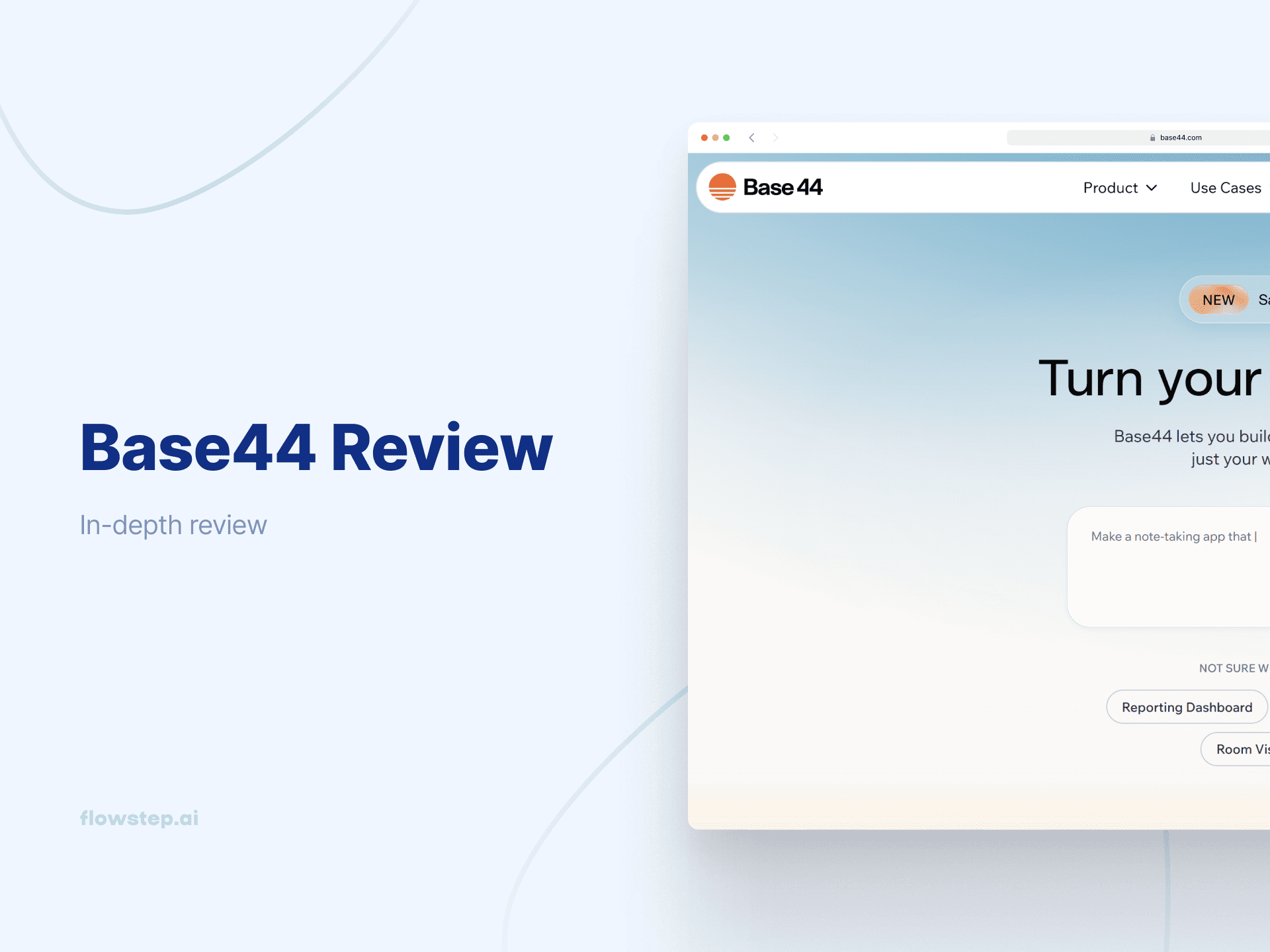
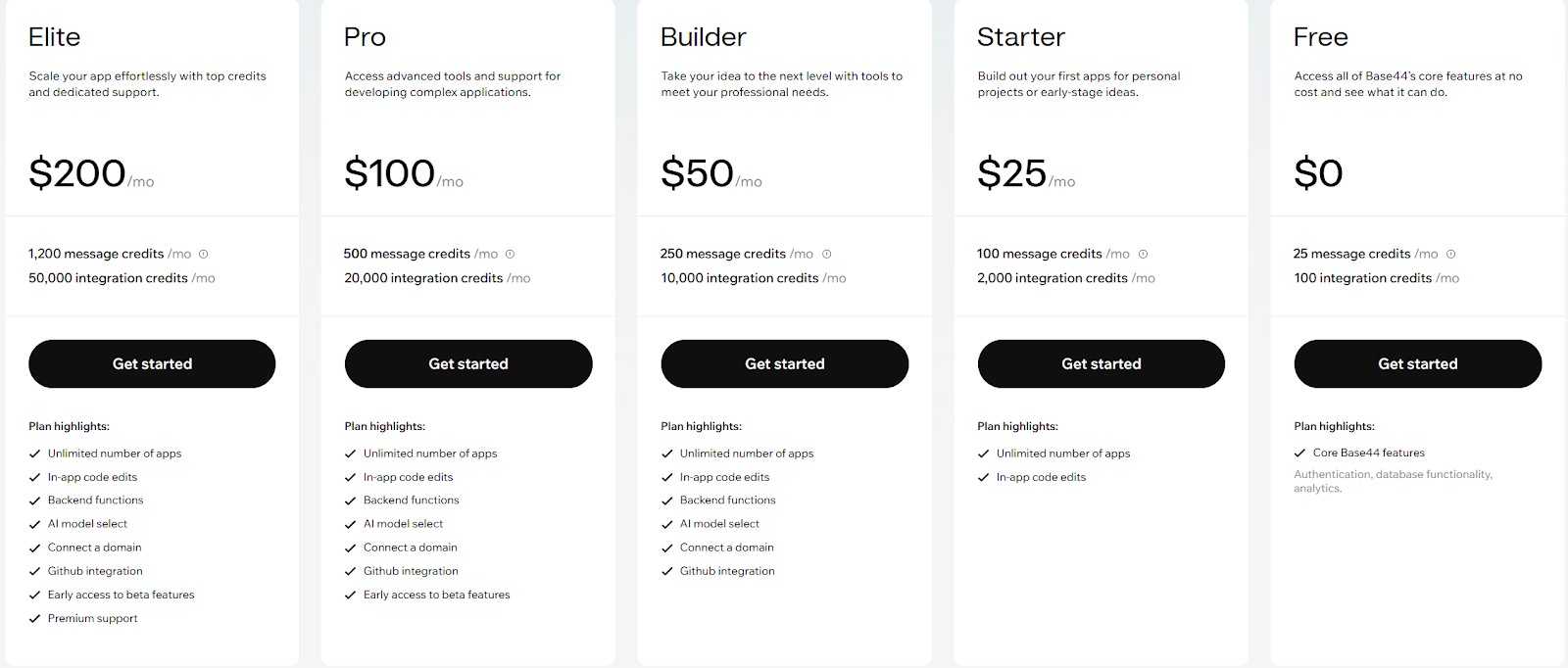
Base44 is an AI-powered app builder that turns natural language into fully working applications—frontend, backend generation, database and auth all included. No third-party database connections to configure. It's the simplest option for non-technical users who want to build internal tools, business apps, CRMs and dashboards without any technical setup or traditional coding.
Builder Chat handles the full development environment behind the scenes—including hosting, backend data management, analytics and custom domains. App creation is fast: describe your idea, and Base44 generates the core functionality and a visual editor for refinements. For teams exploring Base44 alternatives, it's worth noting that Base44 doesn't offer native code export on free plans, which limits flexibility if you need to hand off to developers.
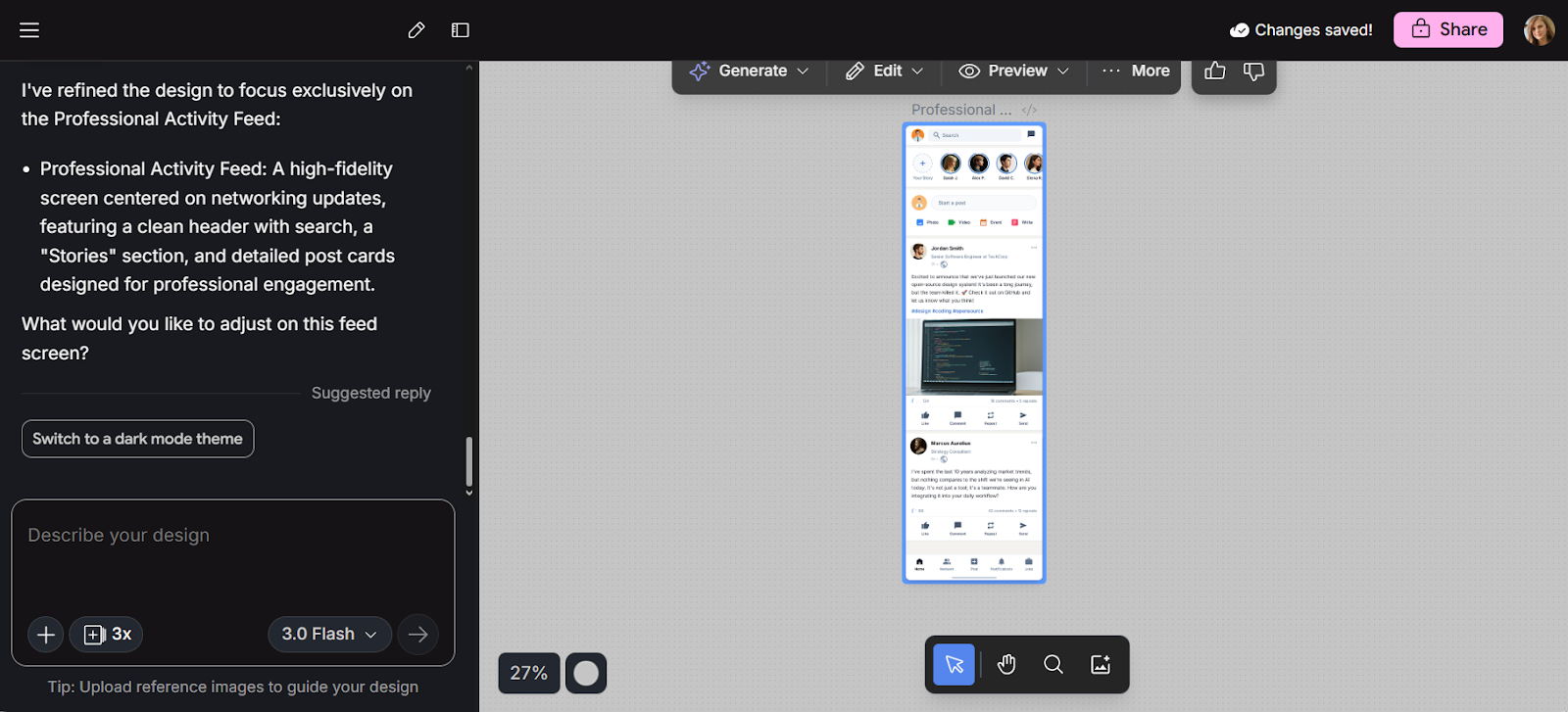
Google Stitch (formerly Galileo AI) is a text-to-UI design tool and Lovable AI alternative that generates interface layouts and front-end code from natural language prompts. It's design-first like Flowstep, but more limited in scope—best for quick ideation and single-screen concepts rather than full product flows. For a deeper look, read our Google Stitch review.
Stitch runs on Gemini models and is currently free. That's its biggest advantage among Lovable alternatives. But the 350 monthly generation limit for Standard mode (200 for Experimental) means heavier design work stalls quickly. Output can feel generic across generations, and multi-screen flows are clunky compared to tools with an infinite canvas approach.
For teams that need more depth, team collaboration and production-ready output, Stitch falls short. Check our full breakdown of Google Stitch alternatives.
Google Stitch is free through Google Labs, with monthly generation limits (200 Experimental, 350 Standard).
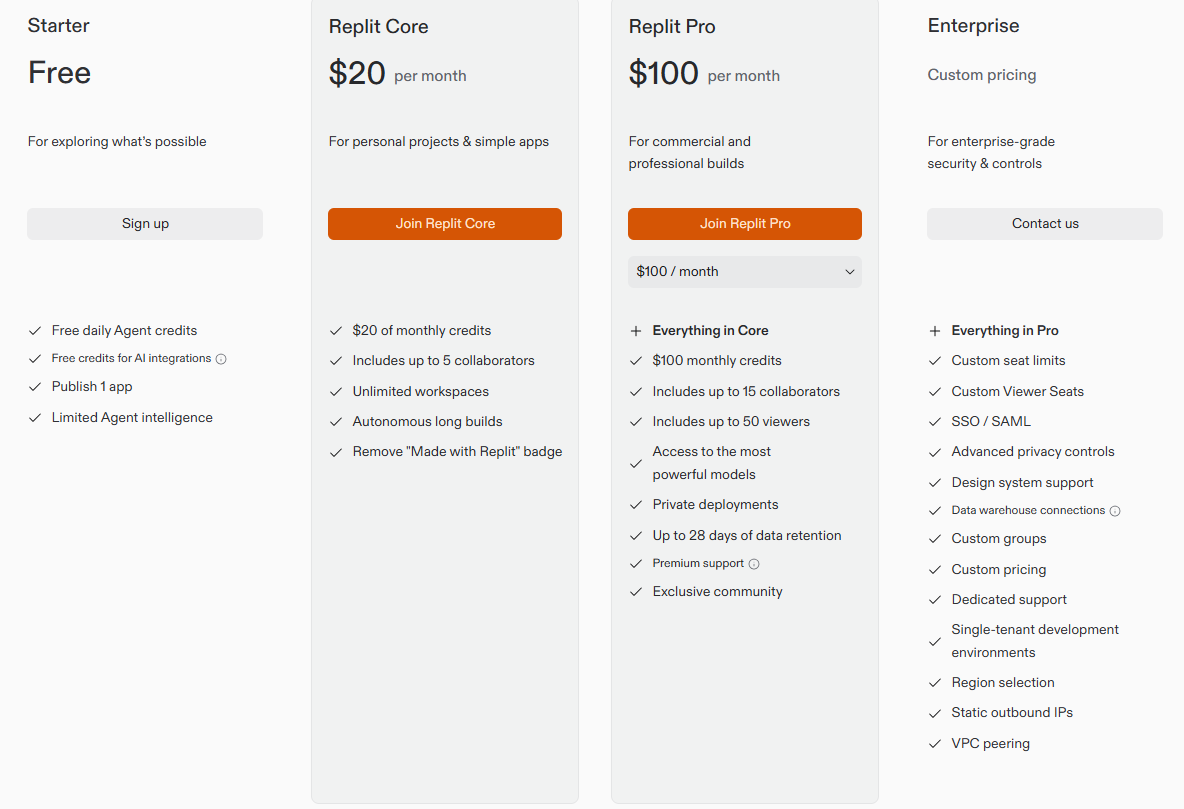
Replit is a cloud IDE and AI-powered development environment—the best Lovable alternative for developers who want a full development platform, not just an app builder. It supports multiple programming languages and includes a built-in PostgreSQL database, hosting and deployment. Full Replit Agent access gives you the entire development lifecycle, from scaffolding to chat one-click deploy, including private projects and offline files.
Replit Agent 3 is the headline AI feature: an autonomous coding agent that can plan, build and deploy code with minimal guidance. The tradeoff: Replit has a steeper learning curve than Lovable, and credit consumption in complex projects is unpredictable. But for developers who want more control over environment setup and the full development process, Replit offers more than any prompt-based builder.
See also: Replit alternatives comparison
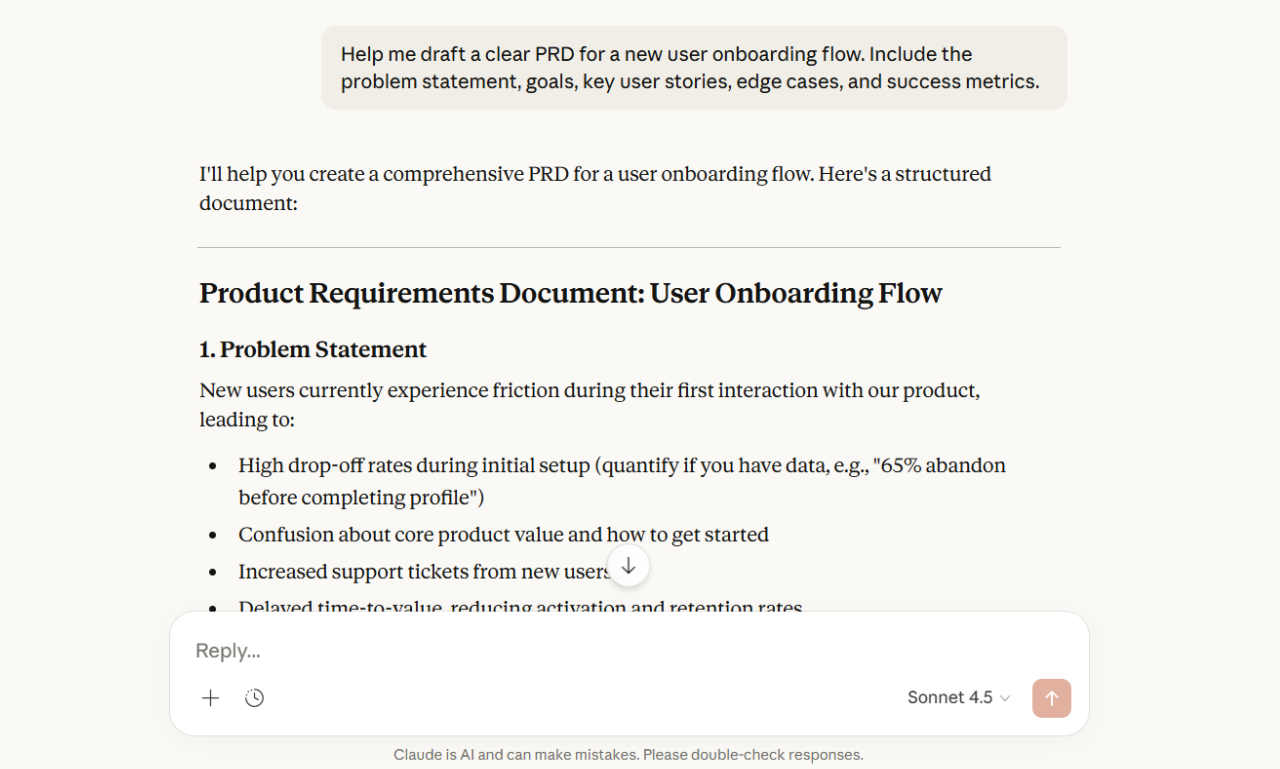
Claude is Anthropic's AI assistant and a powerful Lovable alternative for developers who want to generate UI and full-stack code through conversation. Unlike dedicated app builders, Claude works wherever you are: in the browser, via API or inside a code editor through integrations.
Describe your app idea, paste a screenshot or share a design reference, and Claude generates complete React, TypeScript and Tailwind CSS components with a live visual preview in its built-in Artifacts panel. Iterate through conversation—refine UI layouts, adjust backend logic, fix bugs—all in the same thread. Because the output is production-ready code with no proprietary format, you have complete control and full code ownership from day one.
Where Lovable handles deployment and backend wiring for you, Claude hands you portable production-ready apps you can take anywhere—into Bolt, Cursor, Replit or your own stack. For teams that want a design-first step, pairing Claude with Flowstep gives you the complete workflow: concept to production without rework.
The best Lovable AI alternative depends on what stage you're at. If you're burning credits because you haven't locked in your design direction, start with a design-first tool like Flowstep. Visualize the entire user experience, get team alignment and validate with users—before a single line of code gets written. Then hand off to Bolt, Cursor, Claude or your engineering team with clean designs and production-ready code for production-ready apps.
Flowstep is the best AI alternative for product managers, founders, designers and engineers who want to move from idea to polished UI in minutes, not hours. With an infinite canvas, seamless Figma integration and unlimited collaborators, it's the fastest way to turn product ideas into visual designs your team can test and ship—whether you're into vibe coding or traditional coding workflows. Of all the Lovable alternatives on this list, it's the one that addresses the core problem: design before code.
Want to go deeper on design fundamentals? Explore the psychology behind effective UX, 10 common UX mistakes to avoid and inclusive design principles to make sure the UI you ship is one users actually love.
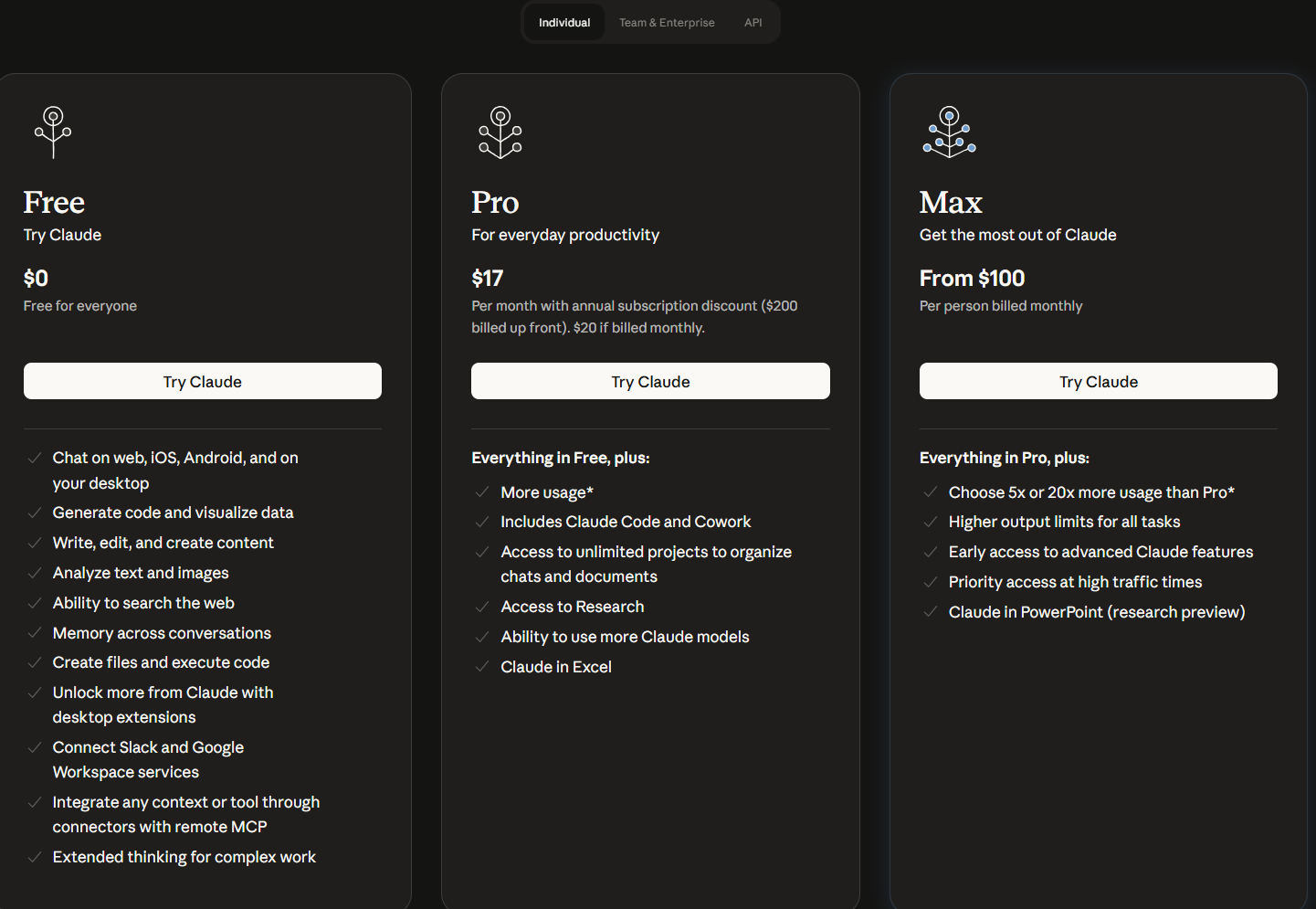
It depends on what you need. For design work, Flowstep's free plan gives access to core features and unlimited collaborators—making it the best Lovable AI alternative for teams that want to visualize ideas before building. Google Stitch is free through Google Labs, but has generation limits. For code-first building, Bolt.new and Replit both offer free tiers with basic functionality, though usage limits apply. Claude's free tier lets you generate React components and iterate through conversations without any subscription.
Several do. Flowstep exports clean 1:1 code in React, TypeScript and Tailwind CSS. V0 by Vercel generates production-ready React components. Bolt.new and Replit both output fully functional full-stack web apps. Cursor acts as an AI assistant that helps developers write and refine code in their own codebase. Claude generates clean React, TypeScript and Tailwind components you can drop directly into your project. The level of "production readiness" varies—most AI-generated code still benefits from developer review before shipping to web apps or mobile apps.
Base44 is the simplest—describe what you want in natural language and get a working app with a built-in database and hosting. For non-technical founders who want to start at the design stage, Flowstep lets you create professional UIs from simple prompts and validate ideas before investing in development. Claude is also accessible for non-technical users: describe your idea conversationally and get interactive prototypes, though taking code into production still benefits from developer involvement.
Yes. Jumping straight into code without a clear design direction is one of the most common reasons teams burn through credits and end up reworking screens. Traditional coding or AI-powered app creation both benefit from having a locked design first. Starting with a design-first tool like Flowstep gives you full control—validate the UI, catch edge cases and align your team before writing code. You'll build faster and waste less when the design direction is already locked.